
How to Potty Train a Puppy in 7 Days is the most daunting aspect of welcoming a new furry member to the family. Been there myself – dirty floors, midnight wake-up calls, and endless cleaning. Along the way, what I learned is that the key to success is a mix of:
- Daily routine
- Regular potty breaks
- Crate training
- Positive reinforcement
It’s a real-life program that works for most puppies. This includes tiny Chihuahuas and medium-sized Labradors.
It also deals with age-specific advice, troubleshooting, and plan of progress to ultimate success.
What You’ll Need to Potty Train a Puppy
| Item | Purpose |
|---|---|
| Crate | Snug but comfortable; prevents accidents |
| Leash & harness | Lead puppy to the potty spot |
| High-value treats | Tiny soft treats for immediate reward |
| Puppy pads (optional) | Transitional indoor potty aid |
| Enzymatic cleaner | Eliminates odor to prevent repeat accidents |
| Notebook/app | Track potty trips and patterns |
| Poop bags & scoop | For outdoor cleanups |
Tip: Choose one consistent potty spot outdoors — smell matters. Puppies associate the scent with elimination.
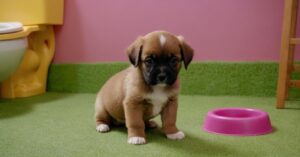
Puppy Age & Potty Interval Guidelines
Puppy Age & Potty Interval Guidelines
| Puppy Age | Potty Interval |
|---|---|
| 8–10 weeks | Every 30–60 min |
| 10–12 weeks | Every 1–2 hours |
| 3–4 months | Every 2–3 hours |
| 4–6 months | Every 3–4 hours |
| 6+ months | Every 4–6 hours |
Preparation
Put the crate in a peaceful corner. Provide cozy beds, but not big crates where a mess is made.
- Establish potty times: Establish a routine feeding schedule to schedule potty times (e.g., 8 AM, 1 PM, 6 PM).
- Block areas of danger: Baby gates restrict wandering.
- Put treats, leash, and potty supplies close to the exit door.
- For puppy pads, put them by the exit door as a transitional phase.
Day 1 — Getting a Routine Started
Objective: Get your puppy “outside = potty.”
Morning Example:
7:00 AM: Wake → puppy to potty area → use short potty signal (e.g., “Go potty!”). Wait 3–5 minutes. Praise & reward immediately on success.
8:00 AM: Breakfast → potty 10–15 minutes later.
During the Day:
- Puppy outside after eating, sleeping, playing, and every 60–90 minutes in young puppies.
- Chart trips to spot patterns.
- Keep it close — no wandering unattended.
Evening:
- Bedtime potty.
- Nocturnal puppy potty <3 months: remind every 3–4 hours.
Tip: Potty trips are low-key and uneventful. Play is secondary to good potty only.
Day 2 — Reinforce the Cue
Goal: Puppy associates the cue with potty.
- Same routine.
- Same short potty cue repeated many times.
- Reward randomly after some successful trips: praise at random, treats from time to time.
- Watch for cues: circling, whining, sniffing → immediate “go outside” cue.
Troubleshooting
- Reluctant pup? Relax, put back close to the same location, and try small high-value treats.
- Too many accidents? Double potty breaks and watches.
Day 3 — Combining Crate Training
Goal: Create a refuge and bladder control device.
- Spaced feeding in a crate to create a positive association.
- Use treat-briefer crate time after potty trips.
- Puppies naturally will not dirty their sleeping area.
- Watch all in-house activity outside the crate.
Tip: Crate size equation — crate length = puppy length (nose to tail) + 2–3 inches.
Day 4 — Drop Indoor Options
Goal: Complete outdoor potty.
- Increase puppy pads’ proximity to the door each day and phase out on Day 4.
- Continue standard feeding & potty schedule.
- Add short leash walks to the potty area to reinforce the connection.
Tip: Reduce outdoor distractions at the potty. Shorten leash & highlight cue.
Day 5 — Increase Daytime Control Gradually
Objective: Reduce accidents, optimize independence.
- Increase gaps between activities by 15–30 minutes if the puppy makes it through successfully.
- Reward the potty with short play, but only after successful completion.
- Limit indoor freedom. Keep freedom limited until a successful habit is formed.
Day 6 — Night Training
Objective: Increase sleeping accident-free.
- Slowly increase night gaps (15–30 minutes intervals).
- Puppies above 4 months can sleep 6–8 hours straight.
- Follow rigid timetables; any variation will lead to temporary nighttime potty outings.
Tip: Quiet evening runs — no play, only praise when puppy is out.
Day 7 — Generalization & Proofing
Goal: Puppy potty trained outside with low distractions.
- Practice potty cue in one area with low distractions (other people, soft noise).
- Supervised indoor freedom continued.
- Reward consistent outdoor potty.
Success is:
- 80–90% successful outdoor elimination.
- Low-level indoor accidents.
- Evening stretches at the age level.
Sample Daily Schedule
| Time | Activity |
|---|---|
| 7:00 AM | Wake → potty → breakfast → potty |
| 9:00 AM | Supervised play → potty |
| 12:30 PM | Lunch → potty |
| 3:00 PM | Nap/play → potty |
| 6:00 PM | Dinner → potty |
| 8:30 PM | Calm evening → last potty |
| 11:00 PM | Night potty (if <3 months) |
Common Problems
| Problem | Solution |
|---|---|
| Frequent accidents | Increase potty frequency, shorten unsupervised time, and use the crate correctly |
| Puppy soils crate | Crate too large? Remove food/water when crated, take outside before crating |
| Puppy sniffs/circles | Wait patiently, use the same potty cue, and short leash |
| Nighttime regressions | Return to the strict routine, increase night trips temporarily |
| Excitement urination | Reduce excitement, greet calmly, reward calm behavior |
FAQs
Q1: How to Potty Train a Puppy in One Week?
You can see big improvements with a good routine. However, full dependence may take weeks. This depends on age, breed, and background.
Q2: Is crate training cruel?
No. With careful application, a crate is a quiet, secure sanctuary and possesses bladder control. Never over-crate a pup.
Q3: My puppy urinates when excited.
Excitement urination is with young pups. Greet calmly, avoid over-stimulating, and reward calm behavior.
Q4: Do I have to use puppy pads?
Optional but convenient with apartment house training. Wean them off gradually to encourage outdoor potty.
Q5: What can I do about distractions outside?
Have a leash close by, remain patient, and turn away from noise or play distractions until the puppy finishes eliminating.
Q6: My puppy has diarrhea or is constipated.
Check diet, cut back on treats, flush with a lot of water, and see vet if symptoms persist.
Q7: Do I wake my puppy at night?
Yes, if your puppy is younger than 3 months. Phase out nighttime checks as they mature.
Q8: When do I potty leash train?
Day one.Utilization of a short-distance leash to train within a room in hopes of establishing strong associations.
I tried to get my dog to “inform” me when it was time to leave. Disaster. Alarms, trip journaling, and crate training to the rescue. Treat potty training like a social media campaign — measure, iterate, reward, and win.
Author – Navdeep Kr., a passionate dog lover and proud pet parent who has completely changed my life. Over the years, I’ve learned so much about the ups and downs of caring for dogs — from their first bath to their silliest grooming moments.
I’m not a professional groomer, just a pet parent who believes every dog deserves love, patience, and proper care. Through my blogs, I share my real-life experiences, what’s worked for me, and even the little mistakes that helped me learn along the way.
When I’m not writing or working, you’ll probably find me exploring pet-friendly cafés, playing fetch at the park, or simply cuddling with my furry buddy after a long day. My goal is simple — to help other dog parents feel more confident and connected with their pets every single day.